The best road trip snacks are chosen the night before, not at the third gas stop. Dietitians who write about travel eating keep the formula plain: shelf-stable foods, single portions, and water to drink. Nuts, whole fruit, and plain popcorn top almost every list. The plan matters because a long drive burns patience faster than it burns fuel, and hunger turns the back seat into a protest.
A little structure saves the day. Group the food into two camps: pantry items that handle heat, and cooler items that need ice. Pack each into single-serving containers so nobody eats from a shared bag on a bumpy road. The payoff is fewer stops, steadier moods, and a food bill that stays small. Readers following this should also see The 4th Grade National Park Pass: Every Kid Outdoors, Step by Step.
Why the best road trip snacks are packed in advance
Advance packing removes the weakest link in car eating: the impulse buy. Rest stop shelves lean toward salt, sugar, and steep prices. A dietitian-reviewed guide from the Academy of Nutrition and Dietetics suggests portioning items into single-serving containers ahead of time, which keeps portions honest and hands clean. Food safety experts add a simple rule for anything fresh: keep it cold, below 40 degrees, so it stays safe past the driveway.
Pantry picks that take the miles
Budget math rewards planners here. A family of four buying single-serve packs at rest stops pays several times the per-portion cost of a box of crackers, a bag of apples, and a jar of peanut butter packed at home. Trail mix built from bulk bins costs less than branded snack bars and travels without crushing. Paper towels, wet wipes, and a small trash bag belong in the same bin, because spilled juice decides whether the next three hundred miles stay pleasant. Packing the night before also prevents the hungry first stop, where prices run highest and choices run thinnest.
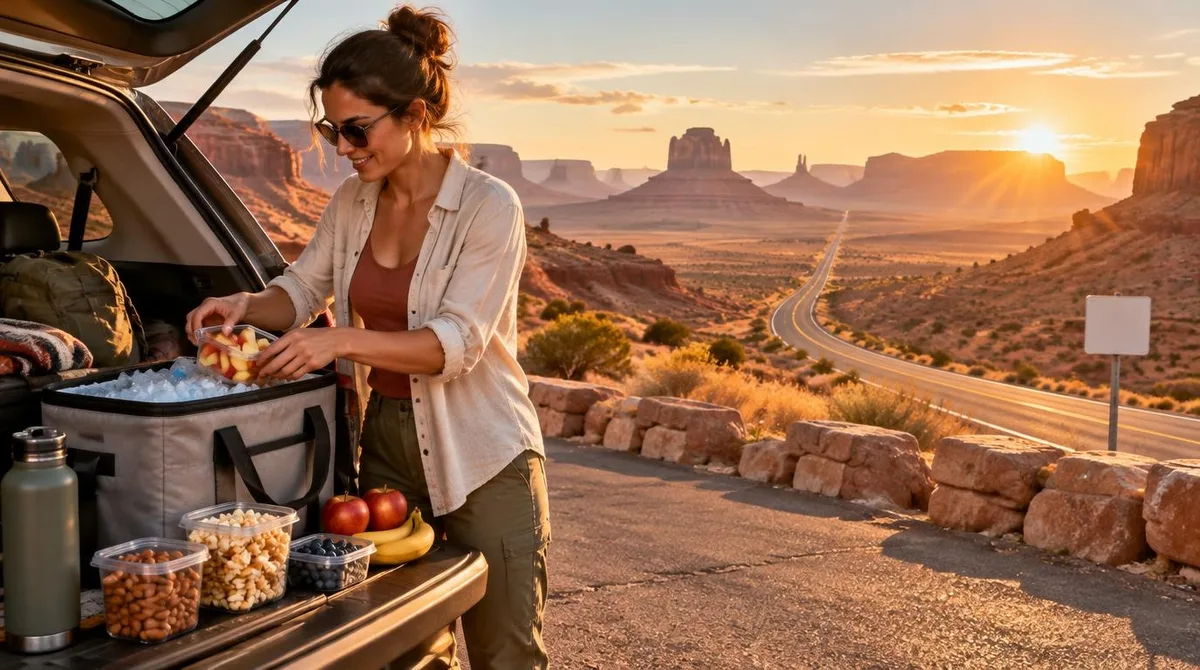
Some foods simply shrug off a hot car. Unsalted nuts lead the list, since they travel well and carry protein. Whole fruit such as apples, pears, and bananas survive a glovebox day better than most. Dried fruit adds chewy sweetness without a mess. Whole-grain crackers and pretzels bring crunch, and plain popcorn keeps the crew busy on a long stretch. Fruit and nut bars cover the sweet tooth, and a jar of peanut butter turns plain crackers into a real snack. These items need no ice and forgive a day in the sun.
Cooler snacks worth the ice
A cooler upgrades the menu. Sliced fruit and cut vegetables taste like a meal when everything else is dry. Hummus or guacamole cups give the veggies a job. Yogurt tubes and string cheese add protein that quiets hunger for hours. The rule from food safety agencies is firm: cold food stays at 40 degrees or below, so pack plenty of ice and keep the lid shut. On summer routes, the cooler earns its trunk space by the second rest stop.
Drinks that hold the line
Drinks make or break the drive. Water remains the top pick from nutrition experts, plain and repeated. Unsweetened seltzer, water with lemon or lime, and unsweetened iced tea with mint add variety without a sugar crash. Heavy caffeine and soda tend to cost more in jitters and stops than they return in alertness. A refillable bottle per traveler keeps the plan cheap and the seats dry.
Conclusion: packing the best road trip snacks saves the drive
The math favors preparation. A grocery run before departure costs less than three snack stands, and the food lands better with tired travelers. Split the load between pantry staples and a tight cooler, portion everything single-serve, and keep water close. The best road trip snacks are less a shopping list than a habit: pack the night before, and the miles take care of themselves. We covered a connected angle in How to Plan a Birthday Road Trip: Route, Ritual and Cake.