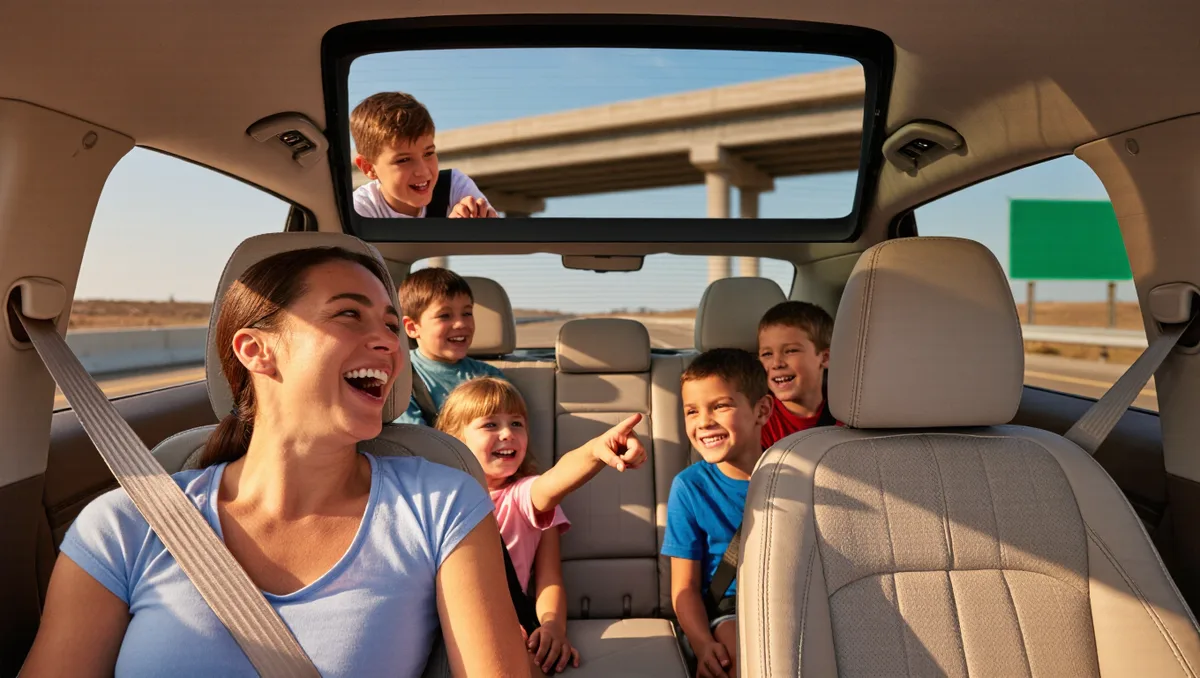
Road trip games fix the back seat without a screen. The classic games need zero gear, just eyes and a scorekeeper. Spotting games turn billboards and license plates into points. Memory games stretch the alphabet across a tank of gas. A little gear, like bingo cards, buys a second wind. Even the driver can play the spotting rounds at a glance.
The back seat runs on its own diplomacy. One AARP essayist recalled a sacred border drawn between two brothers and one armrest. His own trip with a teen got saved by a radio game. The rule was simple: name the song first and score the point. Screens help for a while, and then the old games win the last hour. The right game at the right hour works like a rest stop.
No-Gear Road Trip Games: Memory and the Alphabet
The packing memory game opens the alphabet. Each rider adds an item that starts with the next letter. Then each rider must repeat the whole list from the top. Themed rounds, built around the destination, raise the difficulty. The list usually collapses somewhere past the letter M, to general delight. A speed round on roadside animals breaks most ties. The game ends when the alphabet or the patience runs out. The radio game needs only a working dial. First rider to name a song scores the point.
Spotting Games That Score the Road
The Logo Game turns the highway into a board. Players draw a company name from a hat and watch for it. A billboard sighting scores one point, an actual location scores two, and a radio mention scores three. Highest total after 30 minutes takes the round. Cow spotting splits the car by sides, with a point per cow and 20 for a herd. First side to 50 wins the game. One cemetery pass can wipe the other team clean, so the lead never feels safe. Battle of the Bands awards the winner an hour of playlist control. Songs get picked to fit drawn themes, and votes decide each round.
Road Trip Games With a Little Gear
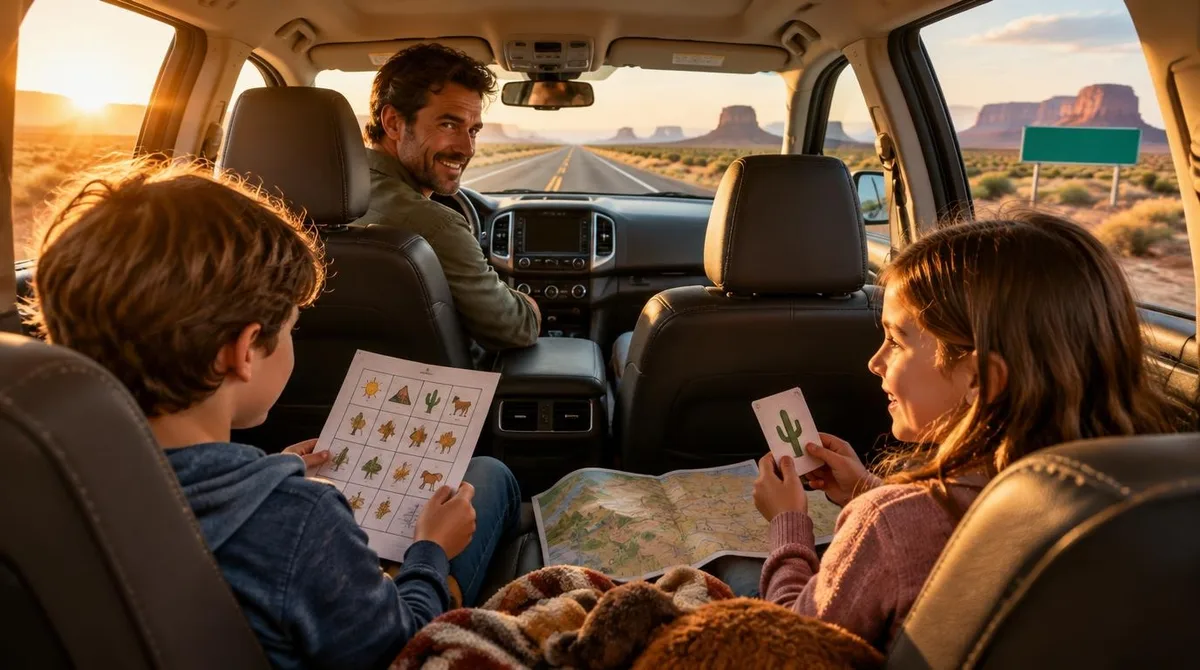
Bingo boards upgrade the youngest riders. Road bingo cards print stop signs, fire trucks and rest stops to find. The squares can be homemade, drawn the week before departure. A license plate version swaps the squares for states, split by region. A coloring map works the same way with crayons and a printed map. Scavenger hunts hand each rider a photo list, judged at the destination for points. A phone camera counts as the only gear for that one. A clipboard makes any front seat a stable desk. Laminated cards survive spilled juice better than paper ones. The sleeping-passenger bluff needs no props at all, just a napper and a straight face. Riders invent a tall tale about the drive the napper missed.
Junior Ranger Books for the Long Haul
National park trips add ready-made road trip games. The National Park Service posts Junior Ranger booklets online, from Park Explorer to Night Skies Explorer. Cave Scientist and Angler booklets fit themed drives nicely. Most programs aim at ages 5 to 14, but all ages can play. Rewards range from printable certificates to badges earned at a park desk. The booklets run a few pages each, light enough for a seat pocket. Badges pin to sun visors as the miles add up. A booklet per park turns mileage into a quest. The NPS App adds audio driving tours and podcasts for the grown-up seats. This connects to our earlier piece, How to Read a Yellowstone National Park Map Like a Trip Plan.
Conclusion: Keep Two Games in Reserve
Even great road trip games stall eventually. Keep two no-gear classics in mind for the hour after the snacks run out. Print one bingo card set and one coloring map per rider before departure. Load the Junior Ranger booklets the week before the parks arrive. One deck in the glovebox ends most squabbles. Two classics, two cards, one badge book: that is the whole kit. The scorekeeper rule matters more than the game: whoever counts, wins. This connects to our earlier piece, The Best Road Trip Apps by Job: Routing, Fuel and Offline Maps.