Solid road trip ideas begin with a number of days, not a destination. A free weekend points at one scenic road. A full week covers roughly 170 miles of desert between Las Vegas and Zion. A month opens the alpine country of Montana. Every pairing below leans on mileages published by the National Park Service.
Three planning rules hold at any length. First, match daily miles to daylight, since byways eat hours faster than interstates. Second, check the official road status page before locking dates. Alpine routes close for snow. Third, book the nights at both ends before the stops between. Gateway towns fill first and fill fast. For related coverage, see Road Trip Snacks That Hold Up in a Warm Car, by Craving.
Road Trip Ideas for a Two-Night Weekend
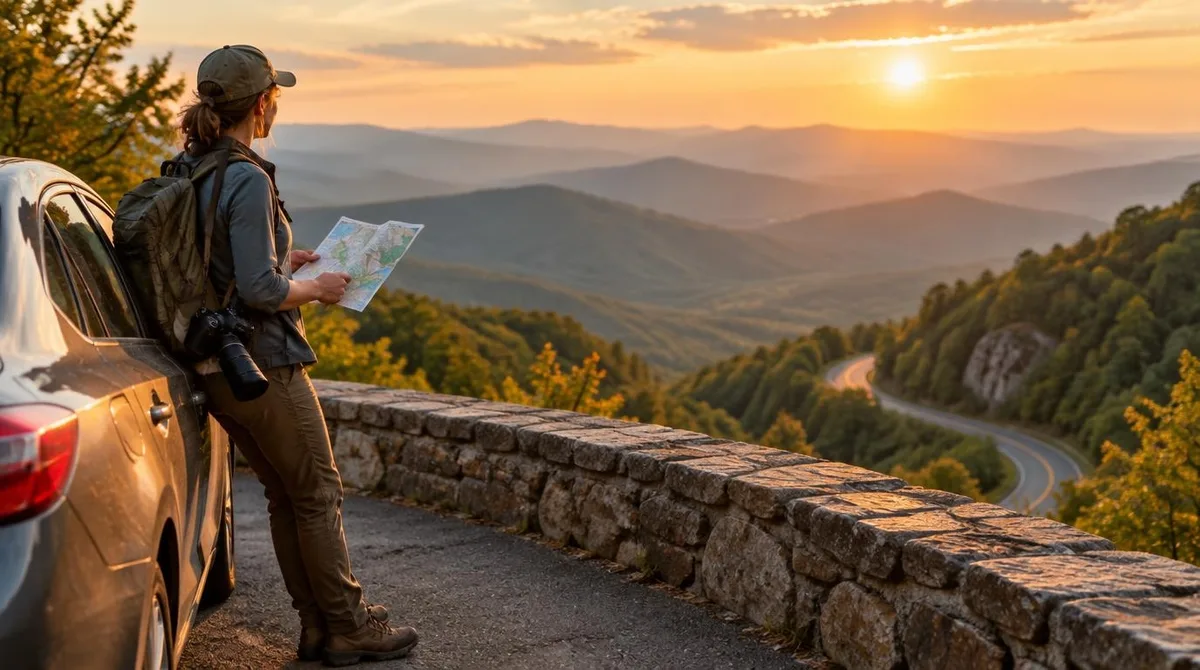
The weekend tier asks for one road with no schedule pressure. The Blue Ridge Parkway fits the brief. It meanders for 469 miles through Virginia and North Carolina. The park service built it for slow travel, at 45 mph or less.
Two nights cover a single slice of maybe 100 miles. That slice holds overlooks, one visitor center and one short hike. Chasing all 469 miles turns a pleasure drive into a chore. The weekend road trip works when the road stays the point.
Weather gets a vote even at this length. The Parkway posts its open and closed sections daily, and mountain stretches can hold snow well into spring. The same logic fits any state byway closer to home. Pick one end, sleep near the other, and drive home on day three.
The Week: 170 Miles From Las Vegas to Zion
A week suits the desert run northeast from Las Vegas. Harry Reid International Airport sits 170 miles from Zion National Park. The core drive takes one easy morning. The park service counts St. George 49 miles from the park. That makes it the last full-service hub before the canyon. For related coverage, see How to Read a Yellowstone National Park Map Like a Trip Plan.
A week leaves room for the stops a weekend skips. Valley of Fire State Park near Overton breaks up the interstate with red sandstone. Kolob Canyons meets Interstate 15 at Exit 40, about 40 miles from the main canyon. Cedar City, 60 miles out, works as a quieter base with cooler air.
Services cluster along the interstate and thin out near the park. Summer heat argues hard for morning driving and an early spot in the shuttle line.
The Month: Chaining Parks Across the West
The month tier strings several parks onto one big loop. Going-to-the-Sun Road in Glacier National Park makes the strongest anchor. The alpine section typically opens by early July. It typically stays fully open until the third Monday of October. The full 50 miles take about two hours of pure driving. Logan Pass, the high point, sits at 6,646 feet.
A month also absorbs the parts a week cannot. That means a float day for weather. It means a second morning at a favorite trailhead. It means long, unhurried transfers between regions. Build in one buffer day per week.
Reading the Season Before Committing
Dates matter more than distance at the month tier. Alpine roads open with plowing, not ceremony. Late June plans can meet closed gates. Mid-to-late-summer monsoon storms rewrite desert afternoons. The quiet weeks of September reward flexible dates almost everywhere in the mountain West.
Shoulder seasons carry the best ratio of scenery to traffic. They also carry variable weather. The fix is simple. Hold cancellable lodging until the forecast firms up, then commit.
Conclusion: Let the Days Choose the Miles
Strong road trip ideas respect arithmetic. Two nights buy one slow road. A week buys the Las Vegas-to-Zion corridor. A month buys the alpine parks. Pick the free days first, then let the mile count follow. One concrete planning note applies here. Check the road status page for every named route in the week before departure. One closure can quietly rewrite the whole plan.