Road trip snacks face one real enemy, heat. A closed car on a sunny day cooks anything perishable. The FDA keeps the numbers blunt. Food sits in the danger zone between 40 and 140 degrees, and perishables get tossed after two hours. Above 90 degrees outside, the window shrinks to one hour. Snacks that survive ride dry, sealed or on ice. Sunshades slow the cook, but they never stop it. A good cooler turns the back seat into a rolling pantry.
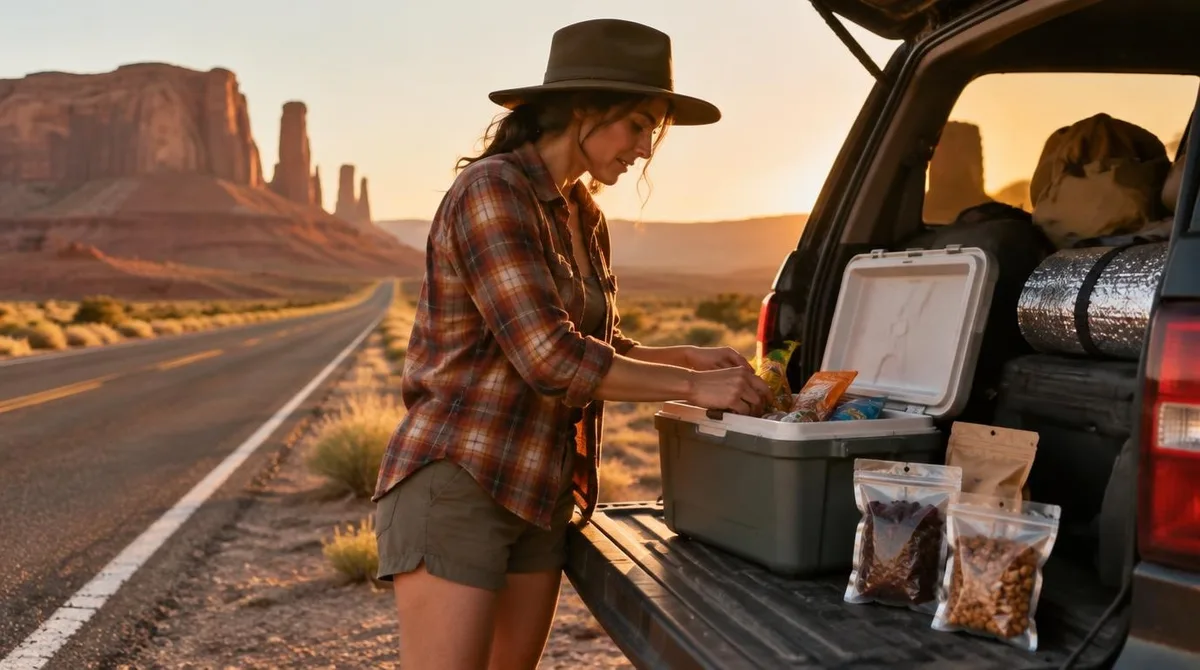
The two-hour rule reframes the whole cooler. Anything with meat, dairy or eggs rides on ice or stays home. Shelf-stable snacks carry the gaps between towns. A separate drink cooler keeps the food chest shut and cold. That single split saves half the ice on a hot weekend. Cold packs beat loose ice for the first day out, too. Freeze whatever can freeze, and the chest starts cold.
Salty Road Trip Snacks That Outlast the Miles
Salty keeps best of all. One AARP road trip essay teased that gas-station jerky has the structural integrity of roofing material. The joke lands, but jerky still earns its seat, since it needs no ice. Sealed nuts, crackers and pretzels ride the same way, through heat and elevation. Single-serve pouches crush less in a packed bag and stay fresh once opened. Sunflower seeds give the driver something slow to do at the wheel. Popcorn survives a day, though it stales by the second. Salty snacks also push the drink schedule, which helps a driver pace stops. This connects to our earlier piece, How to Read a Yellowstone National Park Map Like a Trip Plan.
Sweet Cravings That Beat the Dashboard Heat
Sweet road trip snacks need picking carefully. Chocolate turns to soup on a warm dash, so it rides in a pocket or a cooler. Hard candy and fruit snacks hold their shape all day. Fruit leather stretches the sweet budget without the melt. Gummies hold their shape, but they vanish by hour two. Peanut butter works as the spread of record, packed by road mothers for generations. One AARP writer's mother offered her sons PB&J or gas money, and the sandwich won. Plain granola bars outlast coated ones by a full afternoon in the sun. This connects to our earlier piece, Road Trip Games That Survive the Back Seat, No Gear Required.
Cooler Snacks and the FDA Clock
Cold snacks run on rules, not luck. A cooler with ice or frozen gel packs holds 40 degrees or below. Meat and poultry can pack frozen and thaw on the road. Chicken salad sits in a shallow pan set on ice, with meltwater drained off and ice refreshed. Wrap raw meat tight so juices never touch ready-to-eat food. Keep the cooler in the shade at every stop. An appliance thermometer settles any argument about the ice. Cold food out past two hours, or one hour above 90 degrees, gets thrown away. Two coolers beat one giant chest on every trip.
Fruit, Sandwiches and Rest-Stop Strategy
Produce gets rinsed before packing, not after. Firm-skinned fruit takes a scrub at home, and pre-washed greens skip the sink. Grapes rinse and ride in a lidded box. Crackers pair well with single-serve peanut butter cups. Sandwiches wrap tight and ride up front, out of the sun. Hot food only holds above 140 degrees, so fried stops get eaten fast. Hot dishes can travel wrapped well in an insulated bag until the first table. Road trip snacks taste best at a picnic table, anyway, and any overlook can host lunch. Napkins ride in the same bag, twice as many as seem needed.
Conclusion: Pack the Cooler the Night Before
Road trip snacks deserve a packing hour, not a gas-station sprint. Freeze the meat and a few water bottles the night before. Load two coolers, drinks and food, and keep the shelf-stable bag in the cabin. A written snack list keeps the store run honest. Ice runs cheaper at grocery stores than at highway stations. Check the ice at every fuel stop and refill at hotel machines overnight. The best snack on mile 400 is a cold one that never spoiled.