Aggressive bear activity national park warnings read like jargon until the system behind them clicks. A trail shuts with no explanation. A campground posts a caution sign. A whole valley closes for the season. These are not random calls. Each one is a park reacting to what bears are doing that week, and each one runs through a fixed set of alert levels that travelers can read before the car is even packed.
The stakes stay low with a little homework. America's national parks shelter three species of bears, and most visits never include one. The National Park Service treats a bear sighting as a special treat, not a crisis. The system exists for the rare weeks when behavior changes, and it works when visitors know what each posting means.
Aggressive Bear Activity National Park Alerts, Decoded
Park alerts get pulled from each park's own website, and they come in four levels. Danger describes an imminent hazard. Closure means the park, a major facility or an area is off limits for a reason unrelated to an immediate safety concern. Caution flags a possibly hazardous situation. Information simply notes something that may affect visitor plans. A bear-driven trail closing usually posts as a closure, sometimes with a caution around it. The same pages can be filtered by state, park or type, and the NPS app carries them on the road.
The Four Levels on Every Park Page
The order matters more than the words. Danger sits at the top, and it is rare. Closures come next, and they are the workhorses: a closed trail is a management decision, not a panic. Cautions mark the gray zone, where a bear is around but not yet a problem. Information alerts cover the rest, from detours to changed hours. A road tripper who checks the park's alert page the night before, and again at the visitor center, reads the day's bear picture in under a minute. This connects to our earlier piece, National Park Foreign Visitor Fees: What Changed in 2026.
At the Trailhead: Ask, Don't Assume
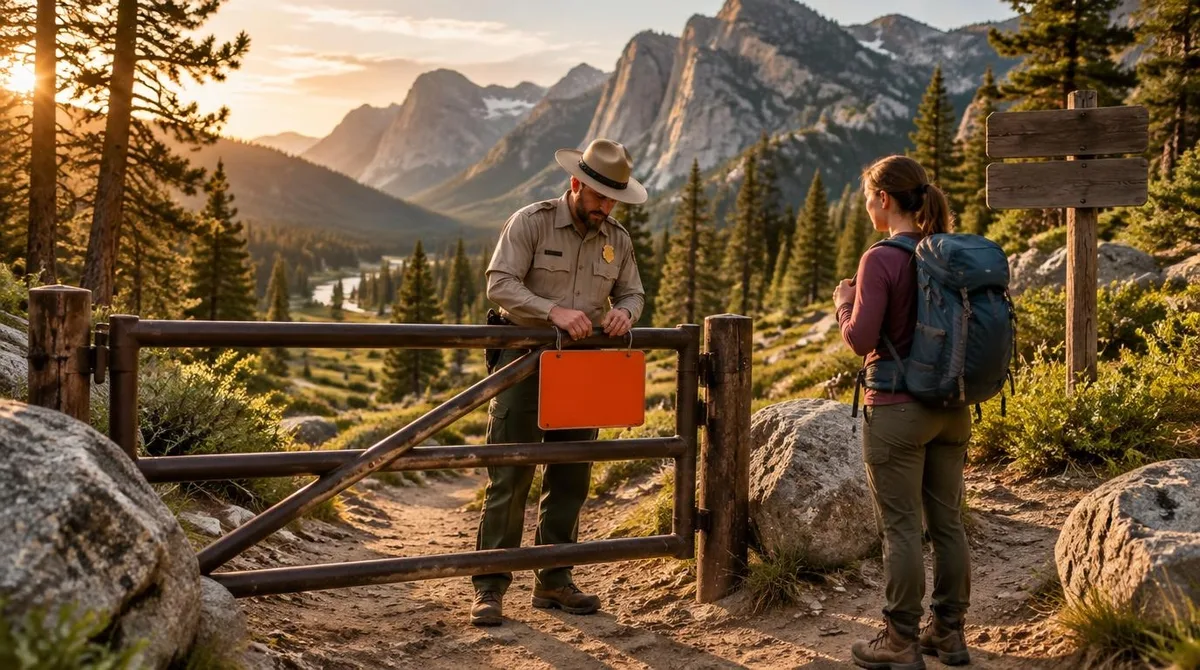
The park service keeps the current word at the nearest visitor center or backcountry office. Rangers there know which trails carry postings and why. The rule that follows every list of bear advice is simple: report all bear incidents to a park ranger immediately. A report this morning can become a closure this afternoon, which is exactly how the system is designed to work. An aggressive bear activity national park report can upgrade a caution to a closure overnight. Skipping the report is the only real failure in the chain.
If a Bear Is Close: Two Playbooks
Encounters have instructions, not guesses. The first move is to identify as human: talk calmly, stand still, and wave arms slowly. A standing bear is usually curious, not threatening. Never run, because bears run as fast as a racehorse, and never climb, because both species climb trees. Back away slowly and sideways, and always leave the bear an escape route. Keep the pack on and the food in it. If a black bear attacks, do not play dead: get to a car or building, or fight back aimed at the bear's face and muzzle. With a grizzly, play dead face down, hands clasped behind the neck, and fight back only if the attack persists. Bear spray is proven highly successful at stopping aggressive behavior in bears, and it is defensive gear, never a body or equipment coating. Spray rules differ from park to park, so the gate is the place to ask.
Conclusion: Check Alerts, Carry Spray, Report Fast
Aggressive bear activity national park postings are the map of a working system, not a scare tactic. One concrete planning note closes it: the night before each park day, open that park's alert page, read the closure and caution lines first, and confirm bear spray rules at the gate, since each park sets its own.