Timed entry is simple in principle: a park limits how many vehicles or visitors may enter during each block of the day, and each block needs a reservation booked in advance. The practice is messier. Every park that runs the system sets its own hours, its own booking windows and its own rules about what happens to someone who drives up without a booking. At its core, the word covers exactly what a dictionary says it does — something arranged to occur at a specific time. According to Definitions.net, "timed" means happening at a certain time or regulated by time, which is a fair description of what the entrance station is enforcing.
The reason parks use these systems is congestion, not revenue in the usual sense. A corridor or a viewpoint has a physical ceiling. When demand on a summer morning exceeds that ceiling, the queue backs up onto the highway and the experience degrades for everyone already inside. A reservation system trades spontaneity for a predictable arrival. The trade is worth understanding before the trip, because the rules differ from park to park and they change from season to season.
This piece explains how the systems are structured, how the booking releases usually work, what the leftover-ticket drops are for, and what the realistic options are when no reservation exists. For broader trip planning, the national parks hub collects route and season guidance, and this article sits in the travel news section, where fee and access changes get tracked as they are announced. We covered a connected angle in Aggressive Bear Activity National Park Warnings: How Closures Work.
What exactly is a timed entry reservation?
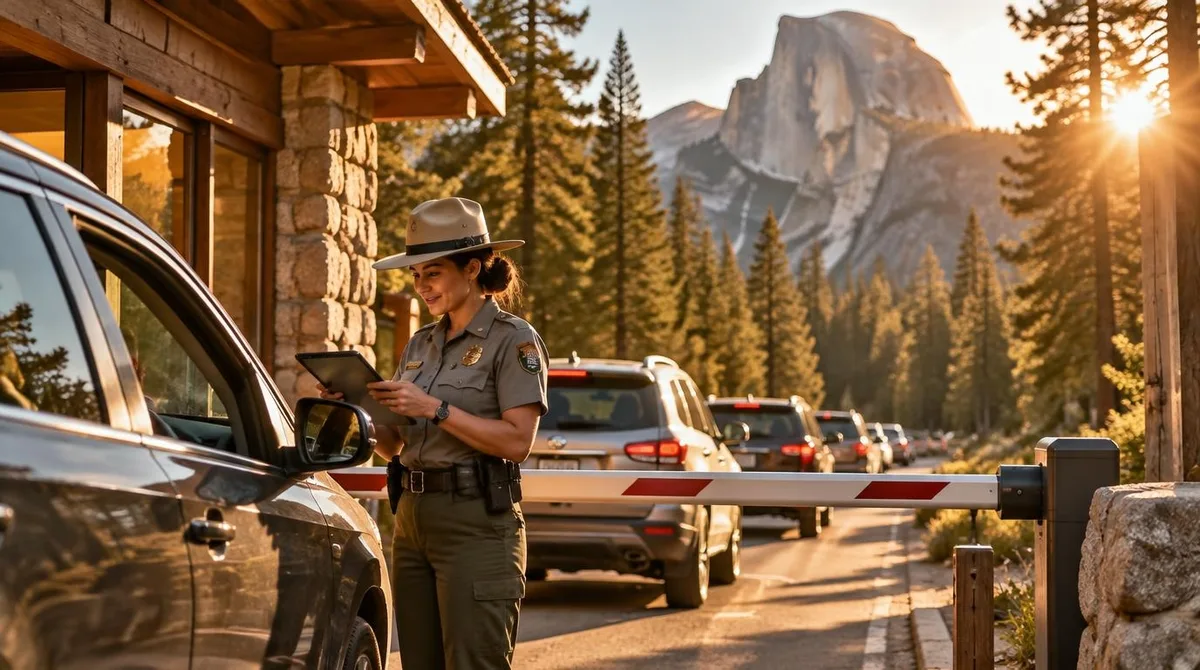
A timed entry reservation is a permit to enter a defined area during a defined window. Two versions exist across the park system, and they behave differently. The first is a vehicle reservation: one booking covers a car and everyone in it, and the check is usually done at a staffed entrance or a checkpoint on the road leading to the popular area. The second is a per-person reservation, more common where visitors arrive on foot, by shuttle or by bicycle.
The scope varies as much as the mechanism. Some systems cover the entire park for a morning block only, leaving the afternoon open. Others apply to a single famous road or a single trailhead corridor while the rest of the park stays first-come, first-served. Reading the scope matters more than reading the existence of the system. A visitor who assumes the whole park is gated when only one road is can waste a morning, and a visitor who assumes nothing is gated can be turned around at a checkpoint.
Reservations in these systems are separate from entrance fees. A park pass may cover the gate fee and still not cover the booking, which typically carries its own modest processing charge. The two line items appear in the same checkout flow, which is why they are often confused.
How do the release windows work?
Nearly every system splits its inventory into two releases. The first is the advance release: a block of reservations goes on sale months ahead, on a set date and usually at a set hour, through the federal recreation booking site. High-demand summer blocks in the most famous parks can clear within minutes of release. The advance release rewards planning, and it rewards knowing the exact on-sale moment, because the booking site queues requests and processes them in order received.
The second release is the next-day or rolling release. A portion of each day's inventory is held back and released shortly before the arrival date, often the evening before or the morning of. This exists for two audiences: road-trippers whose route flexes with the weather, and anyone who missed the advance window. The catch is obvious. The held-back pool is small, the competition is everyone who also missed the advance window, and the release time is precise. A traveler who wants one treats the release like a boarding call, not like a browse.
What are leftover-ticket drops?
A leftover drop is what happens to reservations that were booked and then cancelled, or never claimed. Cancellations flow back into the booking system automatically in most implementations, so the inventory reappears the moment someone releases it. That makes the booking page worth re-checking at odd hours, not just at the official release times. Someone whose plans change on a Tuesday night frees a Wednesday slot that same night.
Some parks also run a formal late-release of unclaimed inventory, and some destinations near the parks — gateway towns, concessioners, local tourism offices — publicize when drops tend to appear. The reliable habit is mechanical rather than clever: check the booking page at cancellation-prone moments, such as the evening before and the early morning of the target date. Persistence beats timing in this game more often than not.
What happens if you arrive without a reservation?
The honest answer is that it depends on the park, the hour and the checkpoint, and the only safe source is the park's own current instructions. Several patterns recur. Before the checkpoint opens, entry is often unrestricted, which turns the system into an alarm-clock problem: arrive very early and no booking is needed. After the enforcement window ends, usually by afternoon, entry often opens up again. During the enforced window, a vehicle without a reservation is generally turned away, and being turned away can mean a long drive back to a junction and a re-plan.
There are legitimate workarounds that do not involve gaming anything. Entering by shuttle, on foot, by bicycle or via a commercial tour often bypasses the vehicle reservation requirement, because the system is aimed at private cars. Camping or lodging bookings inside the park, and some other permitted activities, frequently include entry rights with the confirmation. Holding a booking for one gated corridor does not usually grant access to a different gated corridor, so the confirmation should name the right place.
What this means in practice: the reservation question should be answered during route planning, not at the entrance. A traveler building a driving itinerary can fold the booking into the same planning pass as lodging, using the road-trip planning resources on the road trips section to sequence the driving days around the arrival windows.
How should a road-tripper plan around the systems?
Three habits cover most of it. First, check the reservation status of every park on the route for the exact travel dates, because systems are seasonal and the calendar matters more than the map. Second, set the release dates in a calendar the moment the trip is roughly fixed, and be at the booking site for the advance release of the hardest-to-get blocks. Third, build a no-reservation fallback into each day: an early arrival, an afternoon entry after enforcement ends, or an alternate area of the park that needs no booking at all.
Groups should also decide who books. One person booking a vehicle reservation covers the whole car, so duplicate bookings waste inventory and money. And anyone combining a park visit with a longer drive should remember that a missed block is not a missed trip; the rolling releases and the off-peak hours exist precisely for the flexible.
What to know before you go
The systems reward two things: reading the park's own current rules, and treating the booking like a flight rather than like a suggestion. Rules change season to season, fees and access policies get revised, and the details that trip people up — which road is gated, which hours are enforced, what the confirmation actually covers — are exactly the details the park pages state plainly. Readers tracking the newest changes, including the recent shift in National Park Foreign Visitor Fees: What Changed in 2026, will find that access rules and pricing now move often enough to warrant a fresh check before every trip.
The one contingency worth knowing: if the advance release is gone and the rolling release comes up empty, the early morning remains. Checkpoint enforcement has a start time, and the hours before it belong to whoever is willing to set an alarm. It is the least glamorous reservation strategy in the system, and the most reliable.